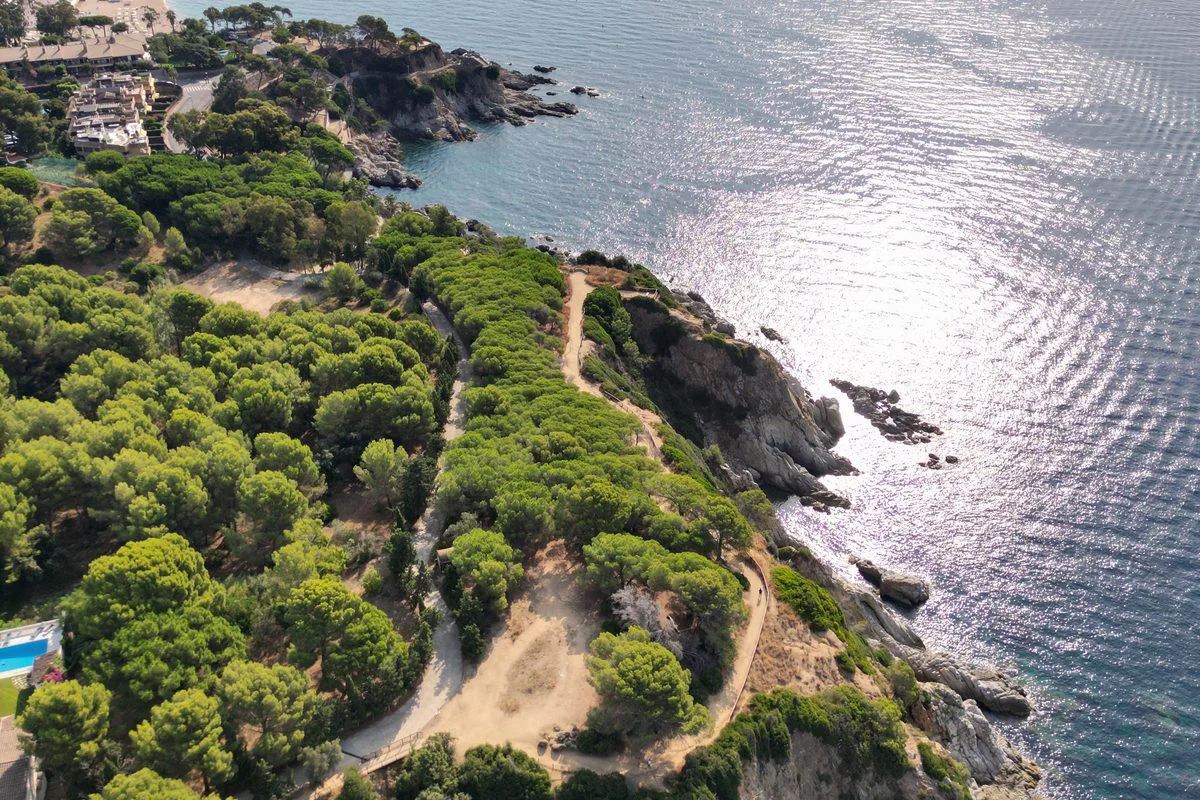
There’s a way to get to know the Costa Brava that needs no car and no tickets: walking beside the sea. The Camí de Ronda in Lloret de Mar follows the coastline through pine woods, viewpoints and coves, along the old paths once used by fishermen and coastal lookouts to keep watch over the shore. Today it forms part of the GR 92 and is one of the best ways to discover the landscape around the town, setting off straight from the seafront promenade.
What is the Camí de Ronda in Lloret de Mar?
The caminos de ronda began life as lookout routes running right along the water’s edge. Over the years they have been restored as public footpaths, and today they link beaches and coves that you would otherwise only see from a boat. In Lloret the route mixes dirt tracks, steps, boardwalks and the odd stretch through residential streets. You don’t need to be a mountaineer, but you do need good footwear and a willingness to go up and down.
South section: from Lloret to Fenals and Santa Cristina
This is the most popular stretch, and the most rewarding. You set off from the end of Lloret beach that faces Fenals, climb up past the Dona Marinera statue, which has one of the best views of the bay, and skirt the rocky area of Cala Banys before heading down to Fenals.
From Fenals the path carries on above the sea, close to the Santa Clotilde Gardens, then heads into the pine woods towards Sa Boadella and Santa Cristina, with its chapel overlooking the beach. If you still have some energy left, you can keep going towards Treumal and the boundary with Blanes. It’s an ideal route for a morning outing, with a stop for a dip in one of the coves and an unhurried walk back.
North section: towards Canyelles and Tossa de Mar
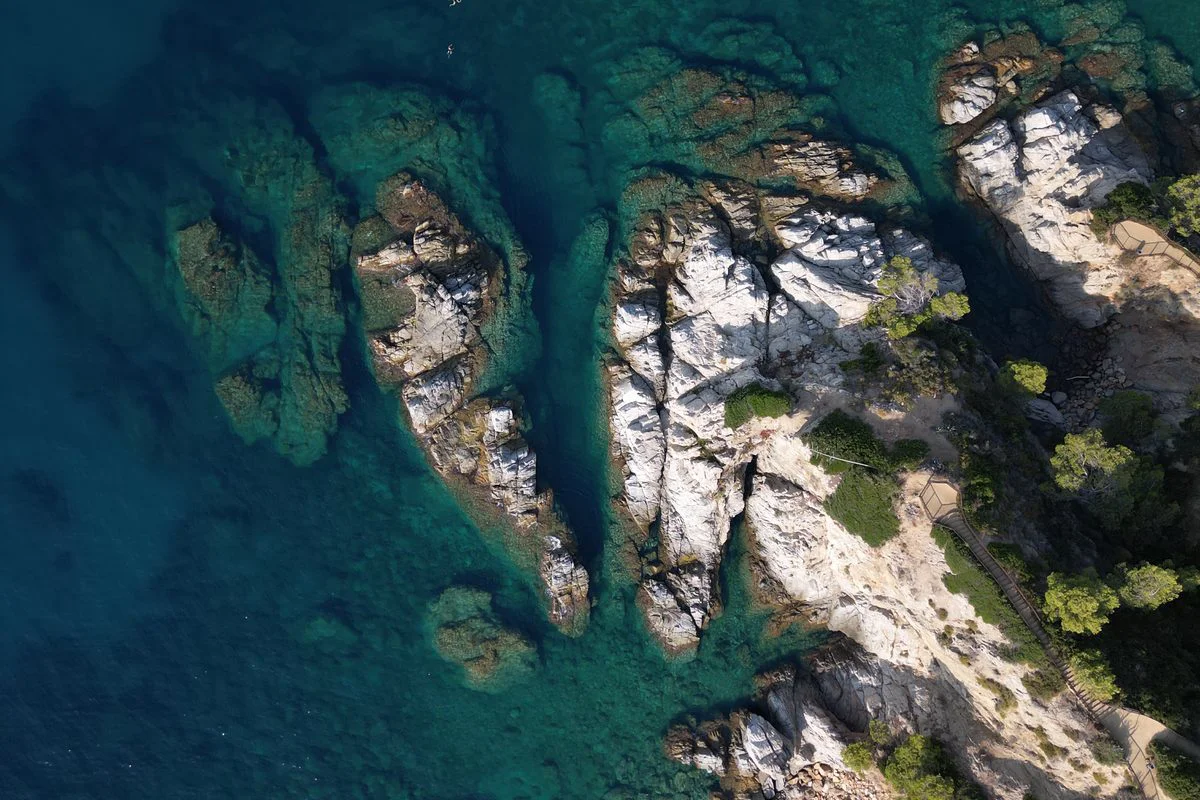
Heading north, the path starts beside Castell d’en Plaja and the little cove of Sa Caleta. From here the terrain becomes more rugged, and the path alternates between spectacular viewpoints, tough climbs and a few stretches through residential developments before reaching Cala Canyelles.
The keenest walkers can carry on along the GR 92 to Tossa de Mar and its walled Vila Vella. It’s a long day with a fair bit of ascent, so it’s best to set off early, take plenty of water and plan your return: in season there is transport between the two towns, but always check the latest timetables before you go.
Tips for walking the Camí de Ronda
- Closed shoes: there are steps, loose stones and tree roots. Keep the flip-flops in your rucksack.
- Water and sun protection: many stretches have no shade and no drinking fountains.
- Swimsuit and towel: the temptation to head down to a cove is constant.
- Avoid the middle of the day in summer: early in the morning or at sunset the light is gorgeous and the heat is much easier to bear.
- Take care near the edges: don’t stray from the path along the cliffs, especially with children or in windy weather.
- Respect the environment: take your rubbish home with you and keep the noise down in nesting areas.
Combine the walk with beaches and gardens
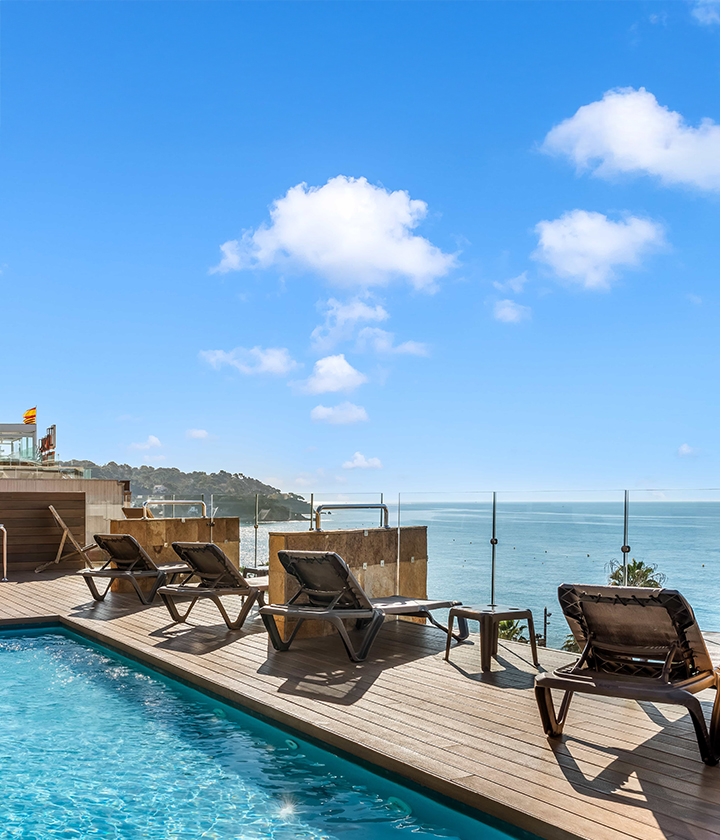
The best thing about the Camí de Ronda is that you can do it in stages. One morning, a stroll to Fenals and a swim; another, a walk to Santa Cristina with a picnic on the beach. In our guide to the beaches and coves of Lloret we tell you what each one is like, and the Santa Clotilde Gardens are right along the way if you fancy a different kind of stop. When you get back, the rooftop pool at Hotel Miramar is the perfect reward for tired legs.
Frequently asked questions about the Camí de Ronda
Is the Camí de Ronda in Lloret de Mar difficult?
The south section, towards Fenals and Santa Cristina, is manageable for almost everyone, although it has some steps and a few slopes. The north section towards Tossa is longer and more demanding.
Can you do it with children?
Yes, especially the stretch to Fenals, which is short and very scenic. Keep an eye on little ones in areas without a railing, and bring water and a few snacks.
What is the best time of year to walk along the coast?
Spring and autumn are ideal: mild temperatures, fewer people and the sea still warm enough for a swim. In summer, it’s best to make an early start.
Your base camp, right by the sea
Hotel Miramar is right on the seafront promenade, so the Camí de Ronda practically starts at our front door. After your walk, you can look forward to the sauna, the rooftop pool with views of the Mediterranean and a great breakfast buffet to set you up for the day. Book directly on our website to get the best price and exclusive offers such as Early Booking.
If anyone asks us what the best thing about this part of the Costa Brava is, we almost always give the same answer: the sea. The beaches in Lloret de Mar range from a large town beach with every facility to little coves tucked away among rocks and pine trees, and many of them are within walking distance. In this guide, we’ll tell you, as locals who know them well, what to expect from each one and when it’s worth going.
The beaches of Lloret de Mar, one by one
The town’s coastline stretches out on either side of the centre. To the south, towards Blanes, you’ll find Fenals, Sa Boadella, Santa Cristina and Treumal. To the north, on the way to Tossa, there are Sa Caleta and Cala Canyelles. That way you can choose according to the kind of day you fancy: comfort, nature or a bit of adventure.
Platja de Lloret: the beach in the heart of town
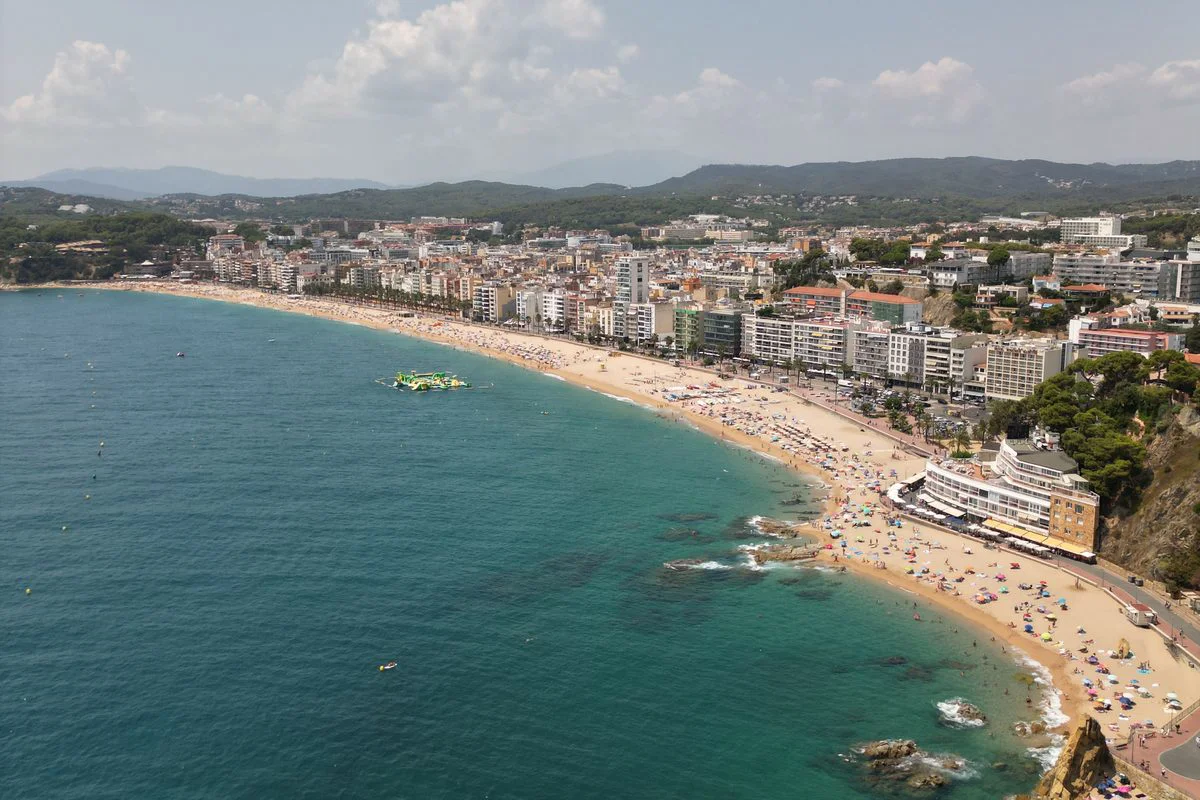
This is the biggest and liveliest beach, with the palm-lined promenade right behind it. It has coarse golden sand, lifeguards in season, showers, sunbed hire and beach bars. At one end you’ll see the Castell d’en Plaja and, at the other, the statue of the Dona Marinera gazing out to sea. From Hotel Miramar, you simply cross the promenade: it’s our beach every morning.
Fenals: spacious and family-friendly
On the other side of the headland by the Dona Marinera lies Fenals, a long beach that’s a little quieter than the one in the centre, with good facilities and a relaxed family atmosphere. It’s a great alternative when the main beach is packed, and it’s close to the Santa Clotilde Gardens if you’d like to combine a swim with a stroll.
Santa Cristina: pine trees and a chapel
For many people, this is the prettiest of them all. It’s surrounded by pine woods, and above it stands the chapel of Santa Cristina, the focus of the July festivities. The water is usually very clear and the setting is pure Mediterranean. Next door is the little cove of Santa Cristina, even more secluded.
Charming little coves
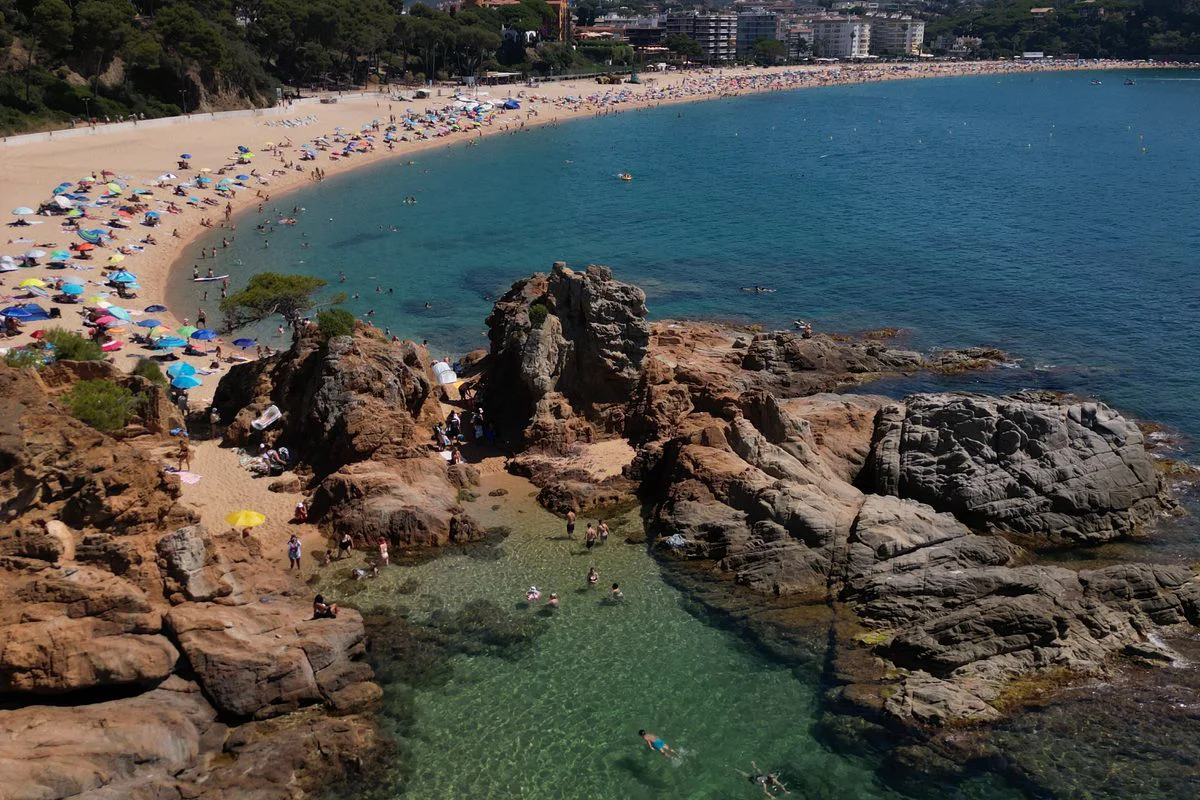
If you’re after something more intimate, Lloret has corners that feel like they belong to another era. The coves are ideal for an early visit, with water shoes and not too much baggage.
- Sa Caleta: a tiny cove by the castle, at the end of the main beach, with fishing boats pulled up on the sand. Perfect for a sunset photo.
- Sa Boadella: between Fenals and Santa Cristina, surrounded by rocks and greenery. One part is traditionally naturist, with a calm and respectful atmosphere.
- Cala Canyelles: towards Tossa, in a sheltered bay with a marina. The water is usually calm and great for swimming.
- Treumal: on the border with Blanes, small, with fine sand and pine trees reaching almost to the water’s edge.
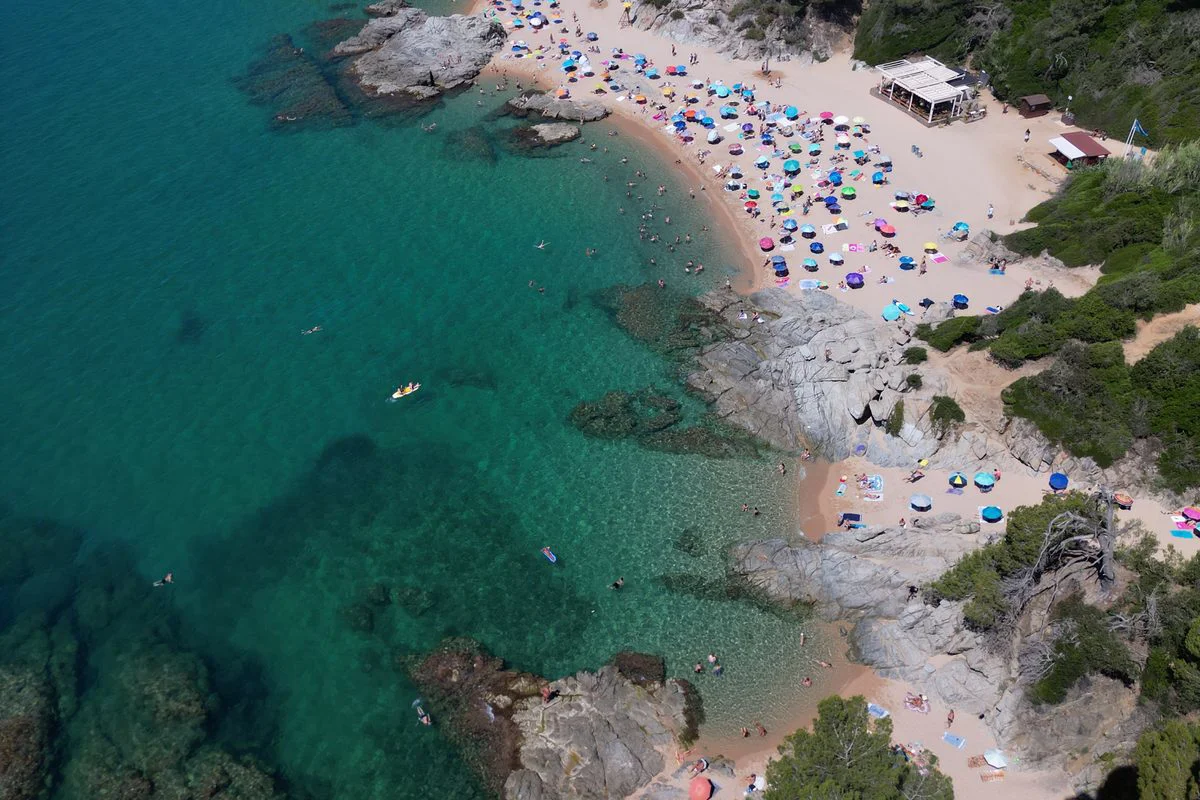
Snorkelling and rocky seabeds
Between one beach and the next, the rocks hide seabeds teeming with life. With a mask and snorkel, you’ll spot fish and underwater meadows just a few metres from the shore, especially around the rocky areas of Santa Cristina, Sa Boadella and Canyelles. Pick days when the sea is calm, don’t stray far from the coast and keep clear of the buoyed-off areas for boats.
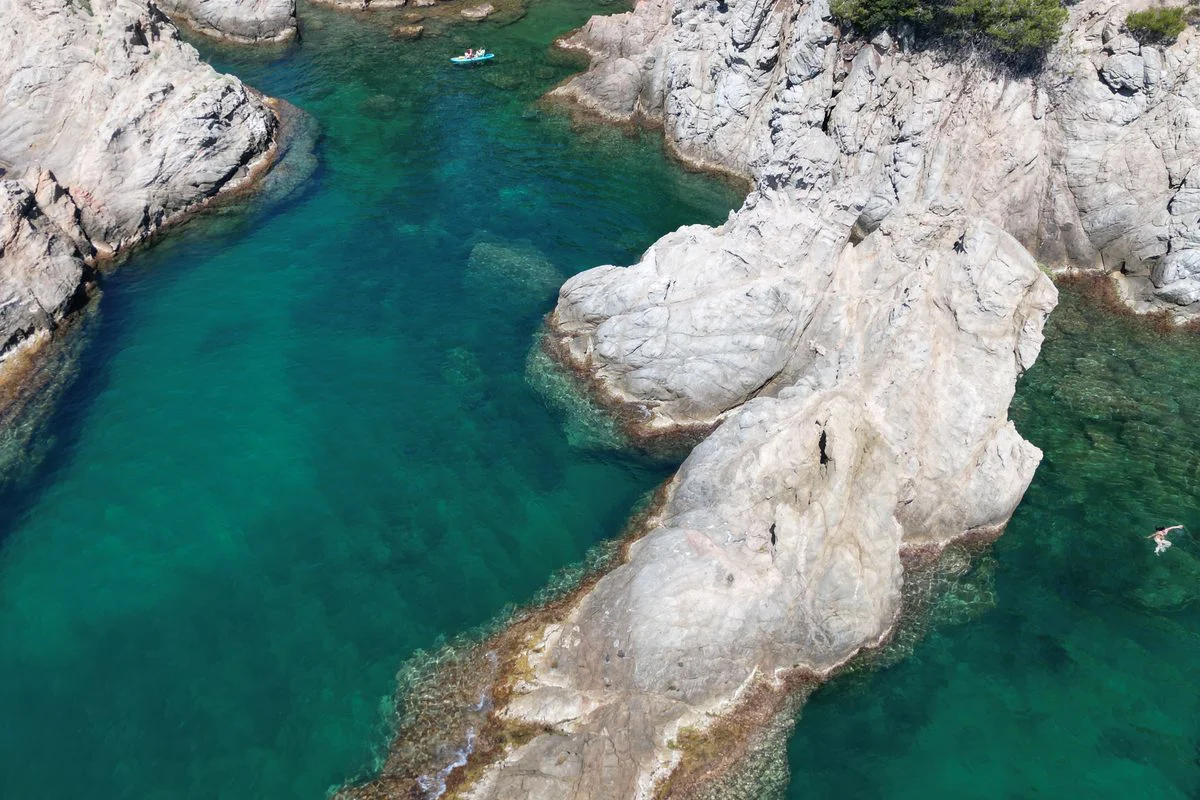
A host’s tips for enjoying the beaches
- Get up early in summer: first thing in the morning, the coves are a different world and the water is like glass.
- Explore on foot: many of the beaches are linked by the Camí de Ronda, a coastal path with spectacular views.
- Bring water shoes: you’ll be glad of them on the coves and rocks.
- Check the flags: sea conditions can change quickly when the wind picks up.
- Look after the environment: take your rubbish with you and don’t pick plants or shells.
After a day at the beach, there’s nothing like heading up to the rooftop pool at Hotel Miramar and watching the evening settle over the Mediterranean.
Frequently asked questions about the beaches in Lloret
What is the best beach in Lloret de Mar for children?
The town beach and Fenals are the most convenient for families: they’re spacious, have facilities and lifeguards in season, and are easy to reach on foot.
Can you walk to the coves from the town centre?
Yes. If you follow the coastal path south, you’ll reach Fenals, Sa Boadella and Santa Cristina. Heading north, the path links up with Sa Caleta and Canyelles, although that stretch is more demanding.
Are there quiet beaches in Lloret in the height of summer?
The small coves tend to be quieter, especially first thing in the morning or late in the afternoon. Outside July and August, even the main beach becomes very relaxed.
Stay just steps from the beach
Hotel Miramar is right on the seafront, on the promenade opposite Lloret beach: step out of the hotel and you’re on the sand. It offers bright rooms, some with a terrace and sea views, and a rooftop pool to round off your day. Book direct to get the best price and exclusive offers such as our Early Booking deal.
Every season, we get asked the same question at reception: what to see in Lloret de Mar if you only have a few days. The good news is that almost everything essential is within walking distance of the centre, and that Lloret is much more than its main beach: there are gardens above the sea, a seafarers’ chapel, hidden coves and an old town full of history. This is the list we give our guests.
What to See in Lloret de Mar on Foot from the Seafront
The Seafront Promenade and Lloret Beach
Start with the obvious, but take your time. The palm-lined promenade runs the whole length of Lloret beach and is the best place to feel the pulse of the town: first thing in the morning, with the fishermen and the joggers; at sunset, when the café terraces fill up. At one end you’ll spot the indianos’ mansions, a reminder of the locals of Lloret who made their fortune in the Americas.
Castell d’en Plaja and the Dona Marinera
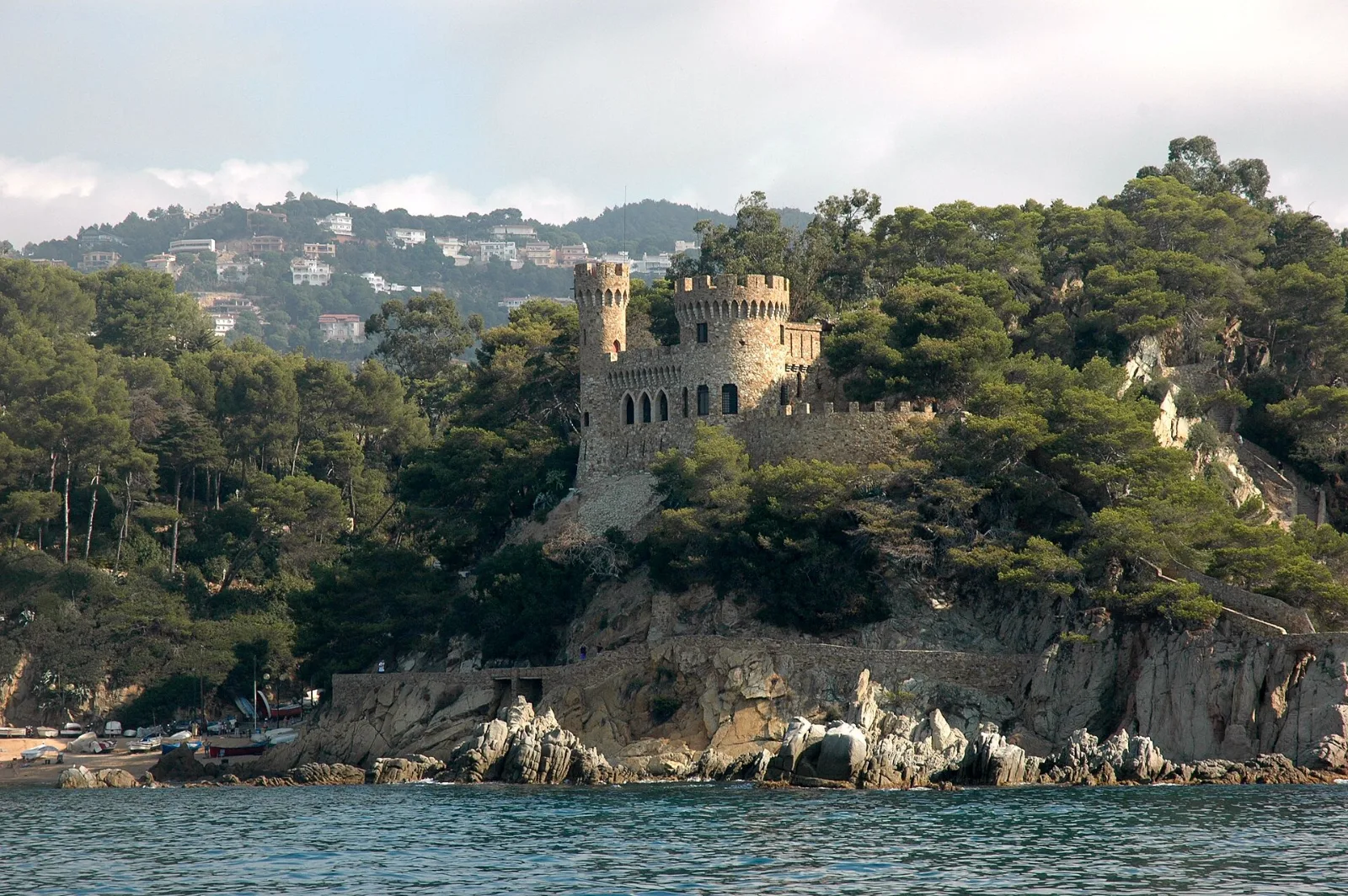
At the end of the beach facing Tossa stands Castell d’en Plaja, a fortress-like building perched on the rocks that has become the postcard image of Lloret. At the opposite end, on the way to Fenals, a viewpoint over the sea is home to the statue of the Dona Marinera, a tribute to the women who waited for the sailors to return. Tradition has it that if you touch her foot while looking out to sea, your wish will come true.
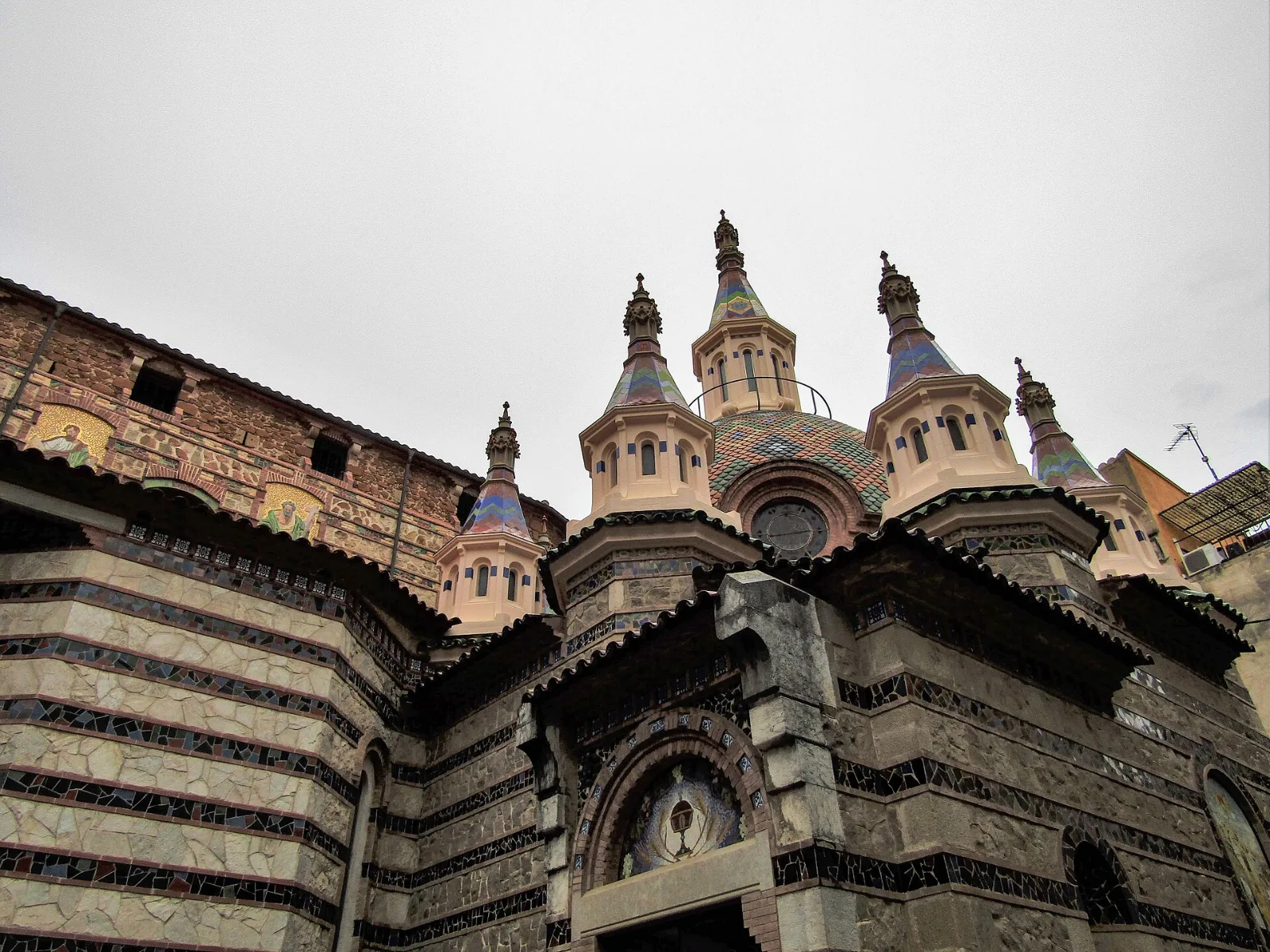
The Old Town and the Church of Sant Romà
Just a couple of streets back from the sea lies the historic centre, with the church of Sant Romà as its star attraction. Look out for the colourful ceramic domes, added in the Modernista period to a church of Gothic origin: it’s one of the most photogenic spots in town.
The Museu del Mar
If you want to understand Lloret, this small museum on the seafront explains the town’s seafaring past, its shipbuilding and the adventures of the indianos. It’s ideal for an hour out of the midday heat, or for a cloudy day.
Gardens, Chapels and History
Santa Clotilde Gardens
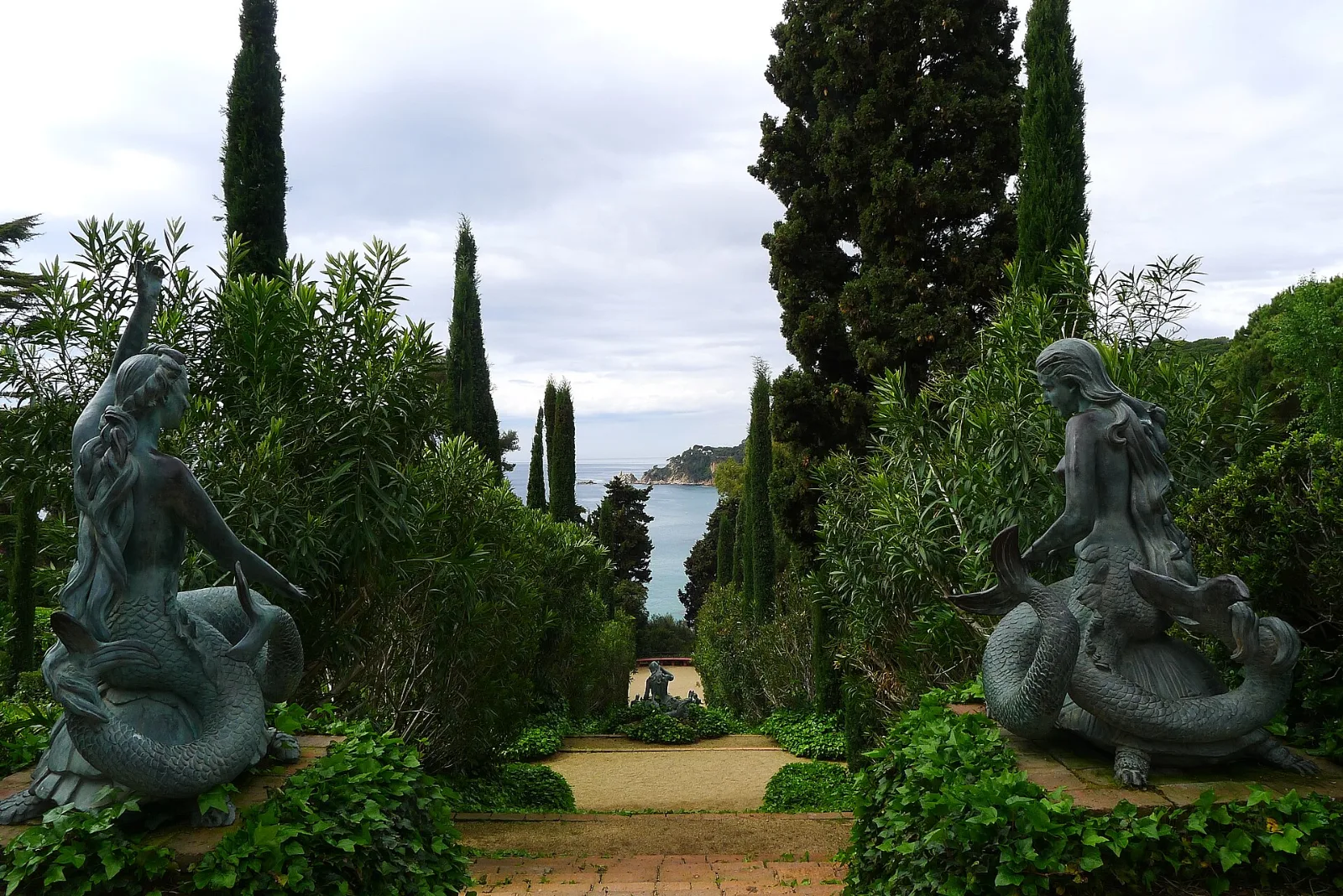
For many, the loveliest spot in Lloret. These Noucentista-style gardens, designed by Nicolau M. Rubió i Tudurí, sit on a clifftop, with stairways, fountains, cypresses and sculptures gazing out over the Mediterranean. Take your time and go when the light is good: late in the afternoon is something special. We’ve written a visitor’s guide to the Santa Clotilde Gardens.
The Modernista Cemetery
It may sound odd, but it’s well worth a visit: the indianos’ families commissioned Modernista-style mausoleums that turn the cemetery into a genuine open-air museum.
Santa Cristina Chapel
Beside the beach of the same name and surrounded by pine trees, the chapel of Santa Cristina is the most cherished spot for the people of Lloret. Every 24 July it is the focus of the town’s patron saint festival, with a procession of boats at sea. Find out more in our guide to the Santa Cristina festivities.
The Iberian Settlements
Long before tourism arrived, the Iberians were already living here. The archaeological sites of Puig de Castellet and Turó Rodó offer a glimpse of that past, with great views over the coast as your reward.
Coves and the Camí de Ronda
Lloret has a collection of beaches and coves that deserves days of exploring: Fenals, Santa Cristina, Sa Boadella, Cala Canyelles, Sa Caleta and Treumal, each with its own character. The best way to discover them is along the Camí de Ronda (GR 92), the coastal path that winds between pine trees and cliffs towards Fenals and Santa Cristina or, if you’re feeling energetic, all the way to Tossa. You’ll find all the details in our guides to the beaches of Lloret and the Camí de Ronda. Bring comfortable shoes, water and a snorkel mask: the clear water among the rocks is made for snorkelling.
If You Have Extra Days: Nearby Excursions
Lloret is a great base for exploring the Costa Brava. Tossa de Mar and its walled Vila Vella are very close; Girona, with its old quarter, is a classic day trip, and Barcelona is within easy reach by car or bus for a day in the city.
A Base Right on the Seafront
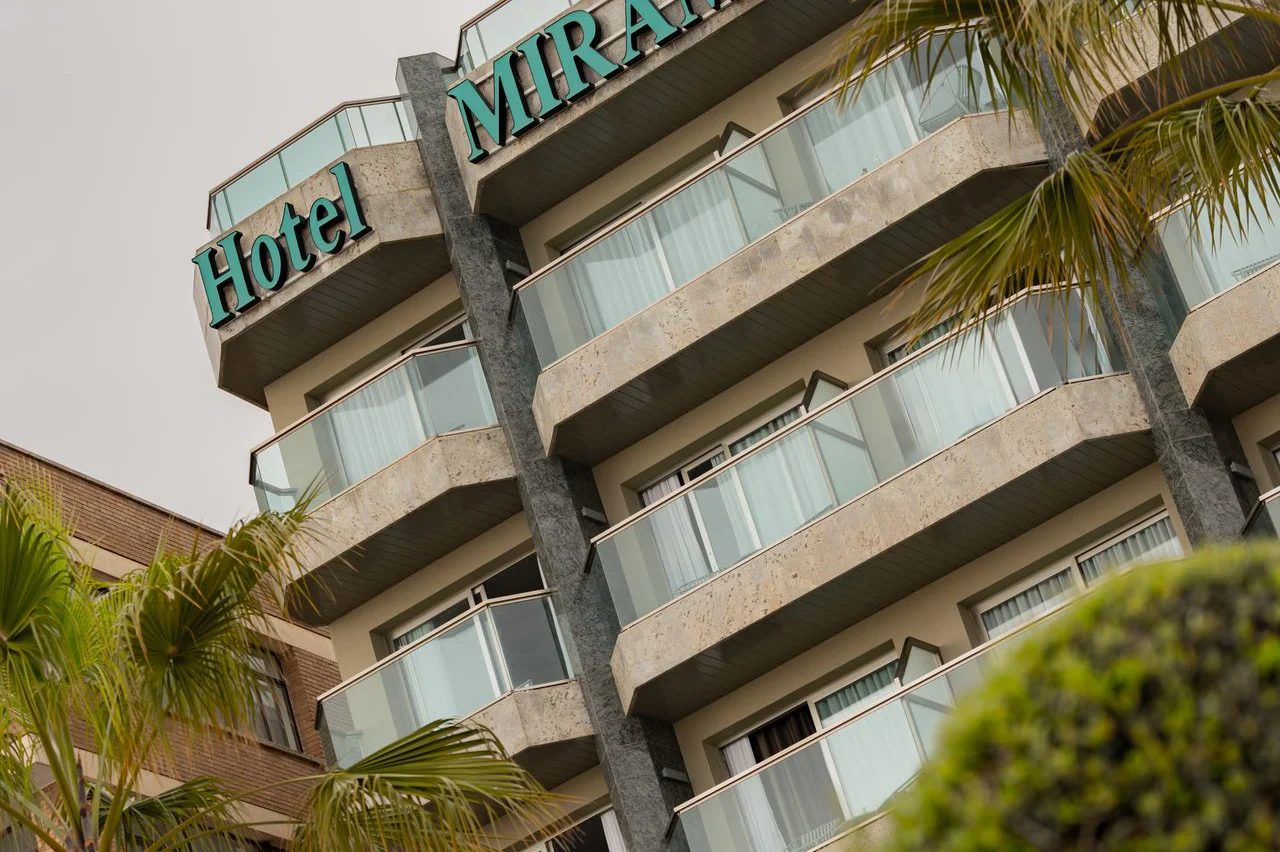
At the Hotel Miramar, on Passeig Jacint Verdaguer, the beach is just a few steps away and the old town a short stroll. After a day of sightseeing, there’s nothing better than heading back to the rooftop pool with its sea views and starting the next day with a good breakfast buffet. If you’d like to know why we love being on the seafront so much, we explain it in hotel by the sea in Lloret de Mar.
Frequently Asked Questions
How many days do you need to see Lloret de Mar?
Two or three days is enough to see the essentials of the town and a cove or two. If you’d like to walk the Camí de Ronda and take a trip to Tossa or Girona, a week is better.
What to see in Lloret de Mar when it rains?
The Museu del Mar, the church of Sant Romà and the Modernista cemetery are all good options for a grey day. Girona is also a great alternative.
Can you see everything on foot?
The centre, the promenade, Castell d’en Plaja and the Dona Marinera, yes. For Santa Clotilde and the more distant coves, you can follow the Camí de Ronda or use transport.
Book Your Stay in Lloret de Mar
Book on our official website for the best price and exclusive offers, such as our Early Booking deal with 10% off when you reserve in advance. Come and discover Lloret with the sea right in front of you.
Opening the curtains to the Mediterranean before your first coffee: that, at heart, is why so many people look for a beachfront hotel in Lloret de Mar. At Hotel Miramar we enjoy it every day from Passeig Jacint Verdaguer, right on the seafront promenade and just a few steps from Lloret beach. Here’s what changes when you stay on the front line, and how to make the most of your break.
Why choose a beachfront hotel in Lloret de Mar
Being on the seafront isn’t just about pretty views for your photos. It changes the way you plan your day, and you’ll notice it from the very first morning.
- The beach as an extension of the hotel. Head down with your towel, enjoy an early dip when the water is calm and the sand is almost empty, then go back to your room without taking the car or hunting for a parking space.
- Less hassle. If you’re travelling with children, not having to lug parasols, cool boxes and buckets halfway across town is a real blessing. Forgotten the sun cream? It’s a quick trip up and down.
- The promenade at your feet. The palm-lined seafront promenade is the heart of Lloret: café terraces, people strolling at sunset and the old town just a couple of streets away.
- The light. Sunrise over the water, the sea changing colour throughout the day, boats in the distance… It’s these quiet moments that make a getaway memorable.
Rooms with a view: the sea from your terrace
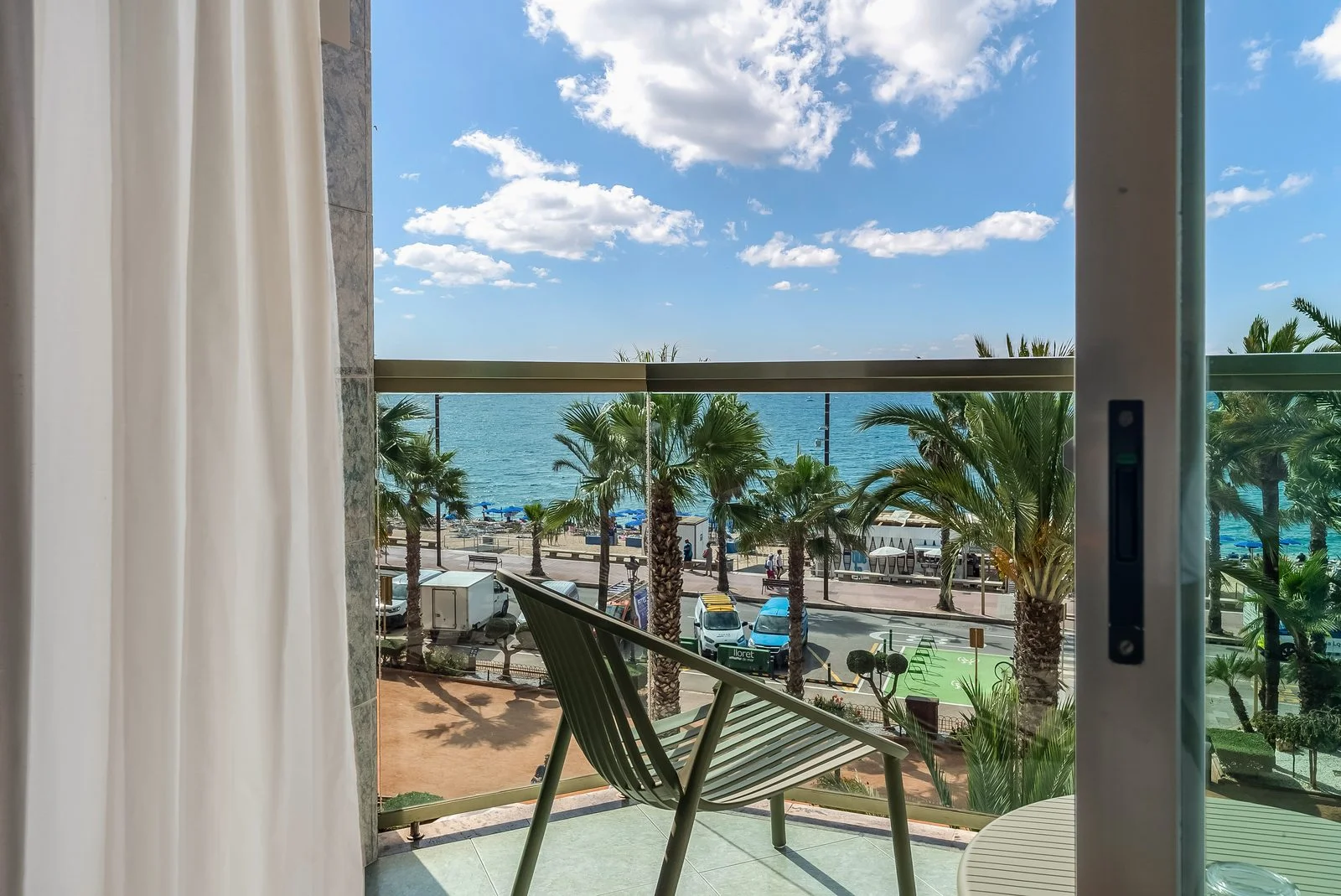
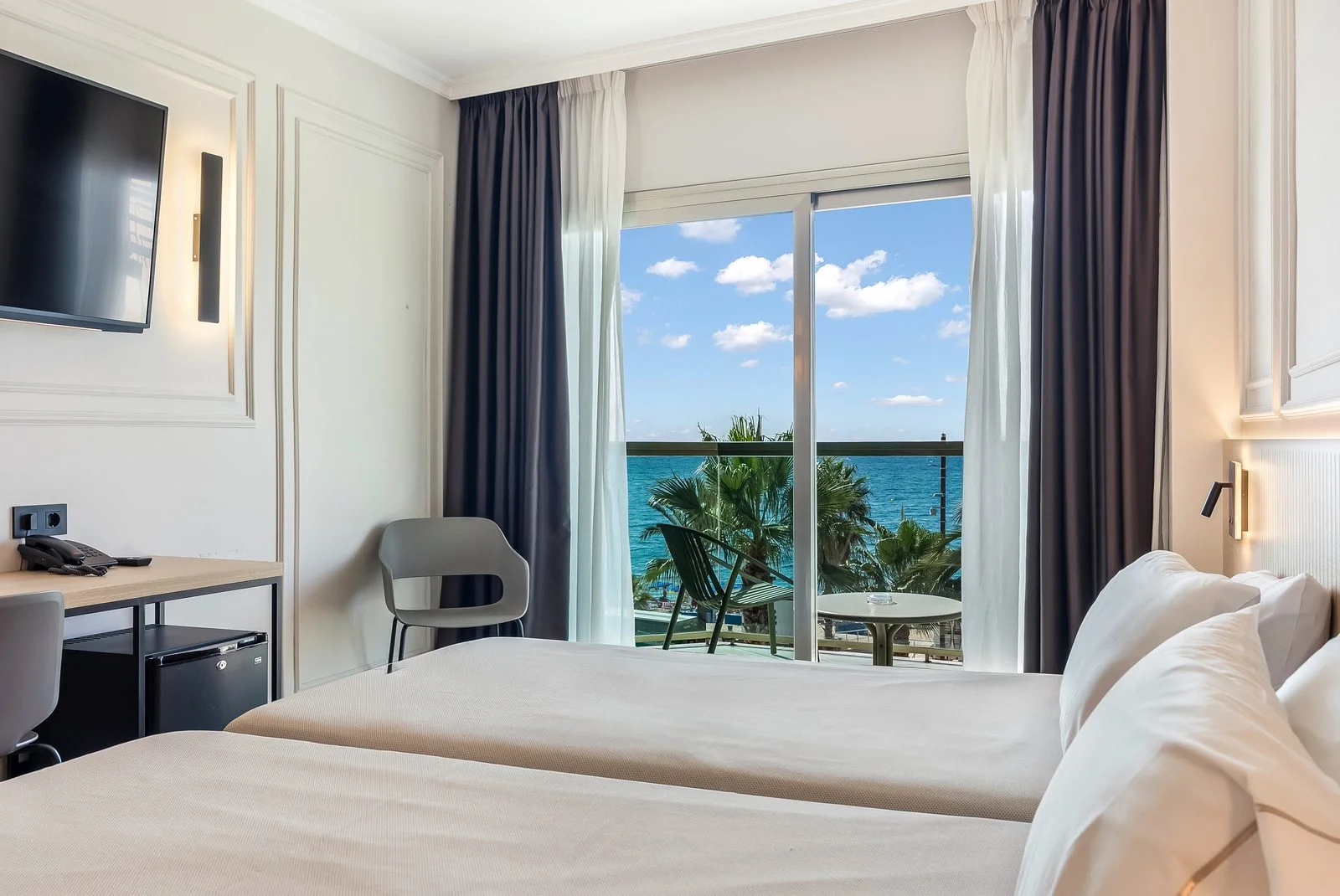
Our rooms have been refurbished in a bright, natural style: light tones, simple materials and room to properly unwind. All of them come with free wifi, an LED TV, a safe and a minibar. If the sea is your priority, take a look at the Double Sea View with Terrace: some rooms have their own terrace overlooking the promenade and the bay, perfect for a vermouth before dinner or for reading while the town wakes up.
A tip from your hosts: if it’s a special occasion, such as an anniversary or a romantic getaway, book in advance. It’s the best way to secure this type of room, especially in high season.
Rooftop pool with views of the Mediterranean
One of the things that surprises guests most when they arrive at Hotel Miramar is the outdoor rooftop pool. From up there you can see much of Lloret’s coastline, and it’s the perfect spot to alternate with the beach: a morning of sand and sea, an afternoon on a sun lounger with a view. The hotel also has a sauna and a gym, in case you want to keep up your routine or relax after a walk along the Camí de Ronda coastal path.
A breakfast to start the day right
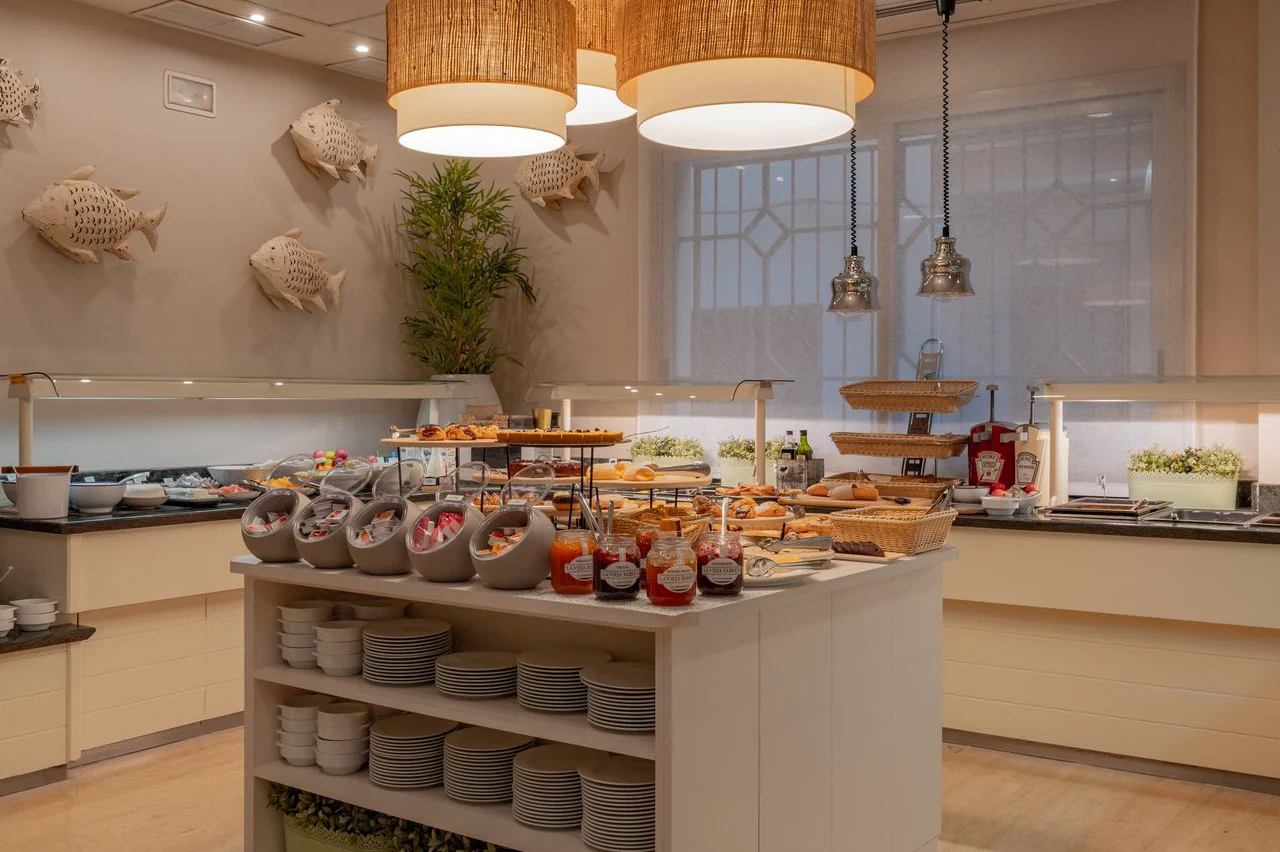
This is the kind of breakfast buffet that tempts you to come down without rushing: pastries, fruit, hot dishes, juices… There’s something for those who want a light bite before heading to the beach, and for those who prefer a hearty breakfast before an excursion to Tossa de Mar or Girona. And during the day, the lobby bar-café is a great meeting point for a coffee or a soft drink.
What to bear in mind when booking on the front line
- The car: the seafront promenade is right in the centre of town. The hotel offers paid parking about 400 metres away, so you can leave the car and get around on foot throughout your stay.
- The season: in July and August Lloret beach is buzzing with life; in spring and early autumn the atmosphere is more relaxed and the promenade invites you to stroll at your own pace.
- The practical details: free wifi and a laundry service, which is very handy on longer stays or if you’re travelling with children.
Want to plan your days? Have a look at our guide to what to see in Lloret de Mar: from Castell d’en Plaja to the Santa Clotilde Gardens, almost everything is a short walk from the hotel.
Frequently asked questions
Is Hotel Miramar right on the beachfront?
Yes. It’s at Passeig Jacint Verdaguer 6, on the seafront promenade in Lloret de Mar, facing the sea and just a few steps from the beach.
Are there rooms with a terrace and sea views?
Yes, some rooms have a terrace and sea views, such as the Double Sea View with Terrace. It’s best to book them early as they’re the most popular.
Does the hotel have a swimming pool?
Yes, an outdoor rooftop pool with views of the Mediterranean. There’s also a sauna and a gym available to guests.
Book your beachfront hotel in Lloret
Book directly on our official website and you’ll get the best price and access to exclusive offers, such as our Early Booking deal with 10% off for booking in advance. Choose your dates and get ready to wake up with the Mediterranean right in front of you.